What are volcanoes?
These iconic geologic features act as pressure valves for the planet by periodically releasing heat and molten rock from beneath the surface. While most people think of volcanoes as high, conical peaks jutting into the sky, most are in fact hidden on the seafloor, clustered in chains of seamounts, or spread along the mid-ocean ridges—where volcanic activity is greatest. They come in many other forms, as well, from chimney-like conduits that explode with lava, ash, and vapor to complex systems of cracks that spew lava at the Earth’s surface. In addition to their well-known destructive power, volcanoes are also a significant generator of new planetary crust as well as a conduit for trace elements and other materials to cycle back to the surface from the interior of the planet.
Where do volcanoes form?
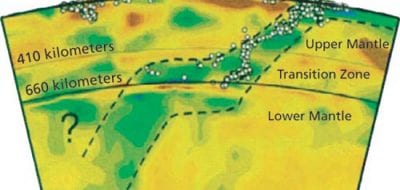
Volcanoes occur in many different parts of the world and in many different geologic settings. Most large or explosive volcanoes are found on or near subduction zones—places where one of Earth’s massive tectonic plate dives beneath, or subducts, beneath another. However, the most active volcanic activity is found along ocean ridges, places where tectonic plates are pulling apart and lava wells up from beneath the surface to fill the gaps. Many large volcanoes are also associated with mid-plate “hotspots”: huge plumes of hot mantle rock that can extend hundreds of kilometers into the depths of Earth’s mantle.
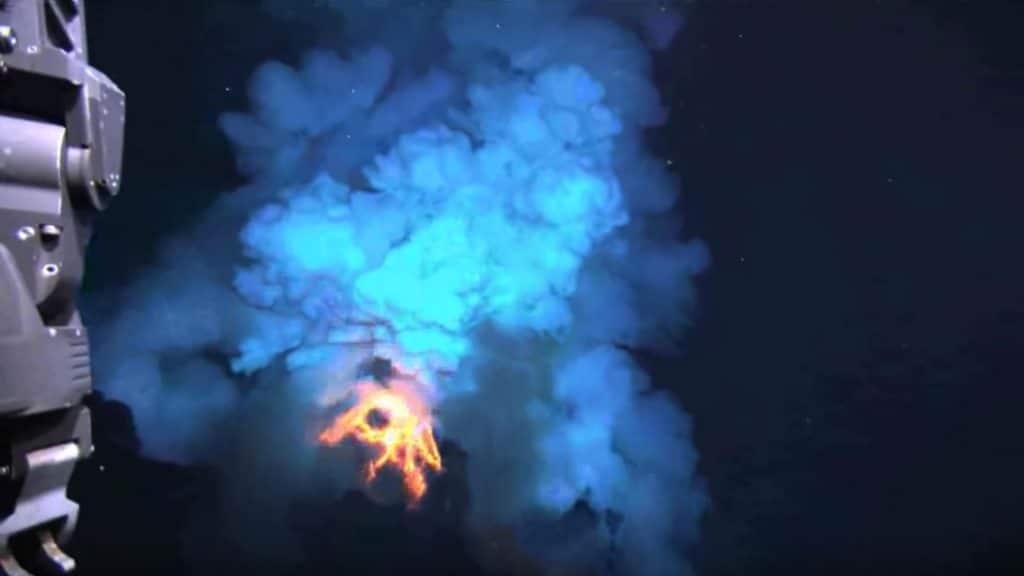
Underwater volcano explodes in the Pacific!
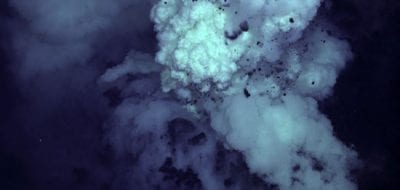
On April 29, 2025, scientists saw a volcano erupt at a mid-ocean ridge in the Pacific ocean through a porthole in the submersible Alvin.
Subduction zones
Volcanoes rim the Pacific Ocean along the so-called Ring of Fire. These cones and their behavior are typical of subduction zones. Rocks carried beneath the surface often contain water in their mineral structure. When they melt, their more volatile components trickle up from below the overriding tectonic plate feeding the growth of a volcano usually through a central shaft or chimney-like conduit. The resulting layers of lava build over time to form a structure known as a shield. Such shield volcanoes are typical of the Cascades Range in the US Pacific Northwest and Japan.
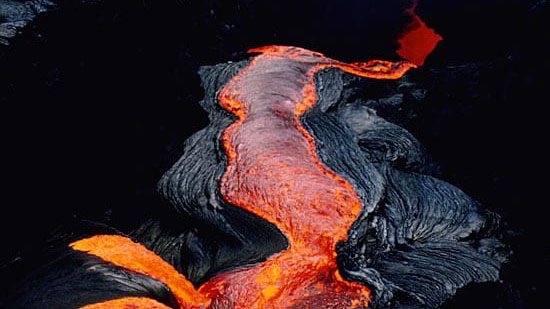
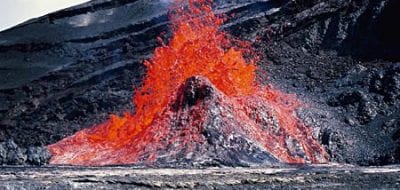
Less explosive volcanoes produce effusive, or continuous, eruptions like those in some of the Hawaiian Islands’ active cones. Known as shield volcanoes for their distinctive shape, Hawaii’s land-based and underwater volcanoes send molten rock from cracks in their flanks flowing in sheets down their slopes. This material cools into many different forms, including pahoehoe (ropy lava) or aa (rough and rocky) at the surface. Underwater, lava cools rapidly into pillow lava, round and bulbous, where the inner rock remains hot inside a cooled orb-like crust, erupting into chains of connected “pillows.” These and other volcanic rock types are called igneous rocks.
Spreading centers
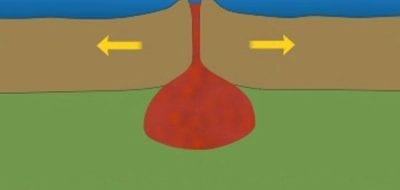
Volcanoes also occur at spreading centers, places on the planet where tectonic plates move away from one another and magma rises up to fill in the gaps. The Icelandic volcano Eyjafjallajökull that erupted explosively on April 14, 2010, for example, straddles the Mid-Atlantic Ridge at one of the few places on Earth where a spreading center occurs on land. The eruption spewed clouds of ash and gas, creating a plume that eventually rose up several miles into the atmosphere.
Geologists in Iceland had some warning that Eyjafjallajökull may have been ramping up for an explosive event in December 2009, when swarms of tiny earthquakes shook the volcano. The tiny tremors were a signal that magma was rising into the cracks and crevices of the earth’s crust, and volcanologists began tracking the volcano’s activity with ground-penetrating radar and other methods. Today geologists keep close watch on many active volcanoes around the world for signs of eruptions that could threaten people near and far.
Did you know?
How old is that volcano?
One of the most common questions that scientists and nature lovers ask when they see an interesting rock is: how old is it?
What determines how violently volcanoes erupt?
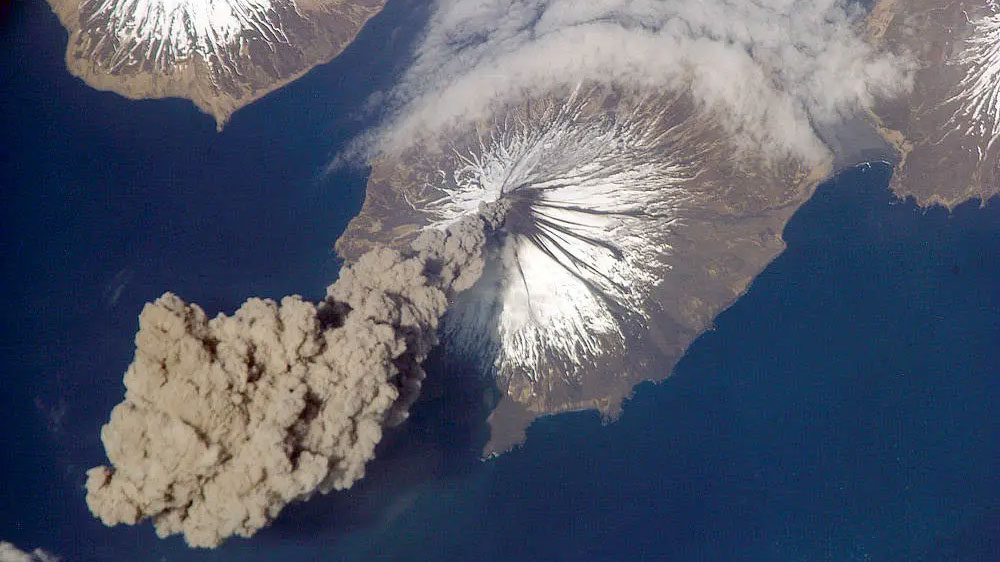
The chemical composition of magma, water content, internal pressure and other characteristics can influence how violently a volcano erupts. Chemical signatures in cooled lava can also describe the composition of Earth’s interior at the time of an eruption that can help geologists understand Earth’s inner workings and distant past.
Why are volcanoes important?
The many hazards that volcanoes present—from unexpected explosions and landslides to long-term climate disruptions—make them well worth watching. The ruins of Pompeii, Italy are a graphic reminder of the hazards associated with living on or near one of the many volcanoes (active or seemingly dormant) worldwide. Nearly 1,700 years ago, people and animals living in Pompeii were almost instantaneously entombed in ash from Mt. Vesuvius. More recently, Mt. St. Helens in Washington State erupted in 1980, ripping more than 1,300 feet off the top of the mountain and causing an estimated $1.1 billion in economic damages, from deaths and injuries to destroyed bridges to lost crops.
Even seemingly inactive or dormant volcanoes may prove unexpectedly hazardous: the Mammoth Lakes region of California is home to the Long Valley caldera, which began to seep carbon dioxide and helium through cracks in the ground in the mid-1990s. The gases killed large numbers of trees in the area, and may have been responsible for some human health problems and several deaths.
Ocean Encounters: Volcanoes
How fiery forces from deep inside the planet shape our world
Short- and Long-term Risks
The greatest hazards associated with volcanic eruptions are lahars and pyroclastic flows. Both are super-heated mixtures of water, gas, dust, and rock that cascade down mountainsides and river valleys and around obstacles, burying or incinerating virtually anything in their path. They often move quickly—faster than a person can run—and can bury large areas extending for miles from the foot of a volcano under hundreds of feet of material.
Volcanic eruptions can have global reach, as well. In addition to killing some 40,000 people nearby, the August 1883 eruption of Mt. Krakatau (Krakatoa) sent aerosols and particulate matter high into the atmosphere and around the globe, cooling the planet by as much as 0.3°C for a year. On an even larger scale, massive sheets of lava deposits, called flood basalts, have spread across continents. The Deccan traps, for example, cover 500,000 square km (nearly 200,000 square miles) of India. This massive volcanic outpouring more than 60 million years ago has been tied to long-term, planet-wide atmospheric changes to the point that geologists have hypothesized that the lava and accompanying gases might have contributed to the extinction of the dinosaurs in the late Cretaceous period.
When Iceland’s Eyjafjallajökull erupted in April 2010, the plume of ash that it ejected into the atmosphere threatened planes flying over Europe and the North Atlantic. Authorities stopped flights several times in following months, stranding travelers and costing the airlines and other businesses millions of dollars. Eruptions such as this can inject millions of tons of particulate matter or tiny pieces of ash and glass into the air, along with gases like water vapor, carbon dioxide, and sulfur dioxide. Although it is still too early to tell how extensively these emissions will affect global climate, they have resulted in stunning, color-saturated sunsets around the world.
Volcanic eruptions can also trigger massive landslides that, if they slide into the water or occur beneath the ocean surface, can cause tsunamis. The eruption of Mt. Krakatau generated a tsunami that was felt as far away as South Africa. In addition, a failure of the unstable slopes of La Palma, a part of the Canary Islands, is often cited as a potential tsunami threat to the east coast of North America and west coast of Europe.
Benefits
Living with volcanoes and volcanic activity nearby is clearly risky, but it can also hold great benefit. The physical breakdown of volcanic rocks, known as weathering, has produced some of the most fertile soils on Earth. Some of the earliest human civilizations settled on the rich, fertile volcanic soils around the Mediterranean and Aegean Seas. Today, some of the best rice-growing regions of Japan and Indonesia are in the shadow of active volcanoes. In Hawaii, the weathering action of heavy rains can produce fertile soil from new lava flows, resulting in the re-growth of vegetation as soon as a few decades after an eruption. Statewide, Hawaii’s rich volcanic soil helps support an agricultural industry worth more than $500 million per year.
Did you know?
Lava flows
When a volcano erupts, the molten rock that comes out of the Earth is called lava. Lava is so hot, it remains molten and flows until it cools and hardens into rock.
References
Expedition to the Northern Galápagos Islands
May 14 to June 20, 2010 Follow researchers to the Galápagos for a month of sea-floor mapping and rock sample collection.
Polar Discovery: Penguins & Lava Flows
November 26 – December 23, 2007 Follow a team of scientists as they tackle the geology of 300,000-year-old lava flows high on Mount Morning.
Dive and Discover: Galápagos Islands
August 23 to September 24, 2001 Explore the undersea volcanic slopes of the remote Galápagos islands of Fernandina and Isabela.
Polar Discovery: Arctic Seafloor
July 1-Aug. 10, 2007 Polar Discovery takes you to the Gakkel Ridge where new underwater vehicles study the Arctic seafloor.
Dive and Discover: New England Seamounts
Journey to the New England Seamounts, a chain of extinct, undersea volcanoes about 500 miles off the east coast of North America.
Dive and Discover: East Pacific Rise
Jan 27–Feb 8, 2000 Travel about 500 miles south of Manzanillo, Mexico to the crest of the East Pacific Rise, a volcanic ridge where the crust of the Earth is being constantly created.
Dive and Discover: South Atlantic
March 24 to May 10, 2000 Follow researchers in the South Atlantic where they use underwater robots prowl a little-explored stretch of the Mid-Atlantic Ridge.
World Organization of Volcano Observatories
March 24 to May 10, 2000 Follow researchers in the South Atlantic where they use underwater robots prowl a little-explored stretch of the Mid-Atlantic Ridge.
Global Volcanism Program
Smithsonian Institution
Volcano World
Oregon State University
Volcanoes
Federal Emergency Management Agency
Volcanoes
United States Search and Rescue Task Force
More topics like this
Hydrothermal vents
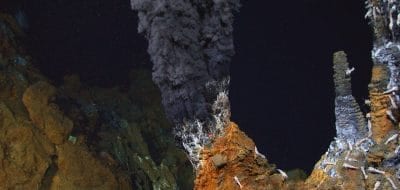
In the sunless deep, hydrothermal vents gush superheated, mineral-rich fluid from the seafloor, building towering mineral chimneys. Around them thrives one of Earth's strangest ecosystems—tubeworms, shrimp, and microbes that live on chemistry instead of sunlight, powered by the planet's inner heat.
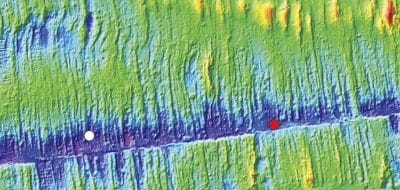
Mid-ocean ridges
The mid-ocean ridge occurs along boundaries where plates are spreading apart.
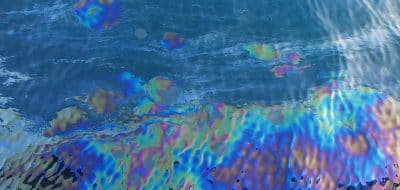
Natural oil seeps
As much as one half of the oil that enters the coastal environment comes from natural seeps of oil and natural gas.
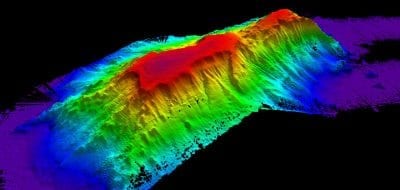
Seamounts
Mountains rising from the ocean seafloor that do not reach to the water's surface.
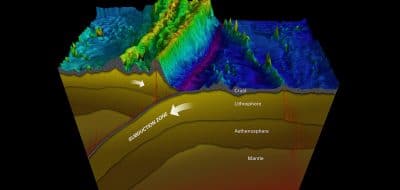
Ocean trenches
Ocean trenches are steep depressions exceeding 6,000 meters in depth, where old ocean crust from one tectonic plate is pushed beneath another plate.
Oceanus magazine
[ ALL ]In-depth research on Underwater volcanoes
Three ocean robots that plunge into active volcanoes
How did the ocean remain so quiet during Tonga’s eruption?

Spock versus the volcano
In Search of the Pink and White Terraces
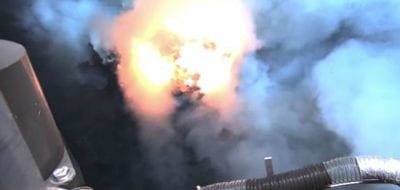
ROV Jason Images the Discovery of the Deepest Explosive Eruption on the Sea Floor
Undersea Asphalt Volcanoes Discovered
Deeply Submerged Volcanoes Blow Their Tops
Robot Paints Stunning Map of Deep-sea Volcano
Plumbing the Plume That Created Samoa
New Wrinkles in the Fabric of the Seafloor
Jason Versus the Volcano
Into the ‘Mouth of Hell’
WHOI News Room
[ ALL ]Press releases
Arc volcanoes are wetter than previously thought, with scientific and economic implications
“Mantle wind” blows through slab window beneath Panama
New geochemical tool reveals origin of Earth’s nitrogen
A Close-up Look at a Rare Underwater Eruption
Get the ocean in your inbox
Fresh discoveries, research, and stories from WHOI — free, every week.